
Places / Yên Hợp – Phú Nhiêu
Yên Hợp and the Rục people
Until 1959 the grandparents of the people here still lived in rock shelters in the forest.
Transcript
This is Yên Hợp, home of the Rục people.
In late 1959, border guards patrolling the forest met a group of people living under rock overhangs. They had no village and no fields.
The Rục survived in the forest on knowledge passed down through generations: striking limestone for fire, cutting forest vines for water, burning grass for salt.
After months of persuasion, thirty-four people from eleven families agreed to leave the caves and found a village.
When you visit, say hello before taking photos, and go with a local guide.
In late 1959 border guards patrolling the Thượng Hóa forest met a group of people living under rock overhangs. They had no village and no fields; they hunted, gathered, collected honey and made flour from forest palms. After months of persuasion, 34 people from 11 families agreed to leave and founded the hamlets of Ón, Yên Hợp and Mò O – Ồ Ồ, now merged into Yên Hợp.
Living with the deep forest. Before they left the caves, the Rục survived in the forest on knowledge passed down through generations. They struck limestone for sparks and caught them in tinder made from plant resin; they kept the fire burning all night and slept sitting beside it to watch for animals. With no stream nearby they cut the thao vine or split bamboo for water. With no salt they burned cogon grass for its ash, or found the cliff faces that monkeys lick. They hunted with crossbows and traps made from forest wood, walked downwind so animals could not catch their scent, and ate little in the forest to keep their steps light. Game was smoked and eaten over a month. Snails from the cliffs, wild honey, củ dấn tubers, dổi seeds and starch from the nhúc and đoác palms kept them alive. And they kept one rule: take only half a honeycomb, half the snails, so the forest gives again.
They are the Rục, a group of the Chứt people. Their language is spoken only, never written. They believe in forest spirits and play the trơ bon zither, the jaw harp and the bamboo flute. Many families still spend ten or twenty days in the forest each farming season, sleeping under rock shelters as their grandparents did.
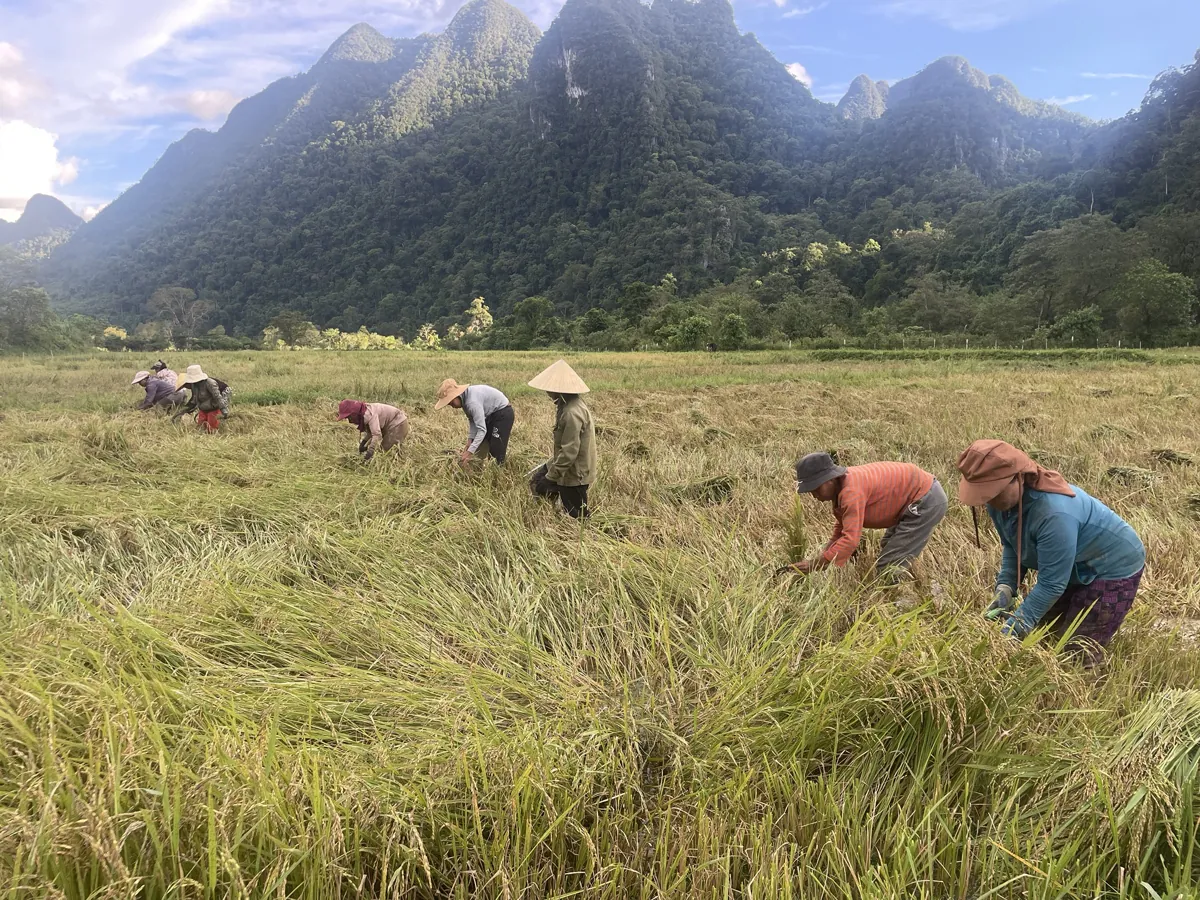
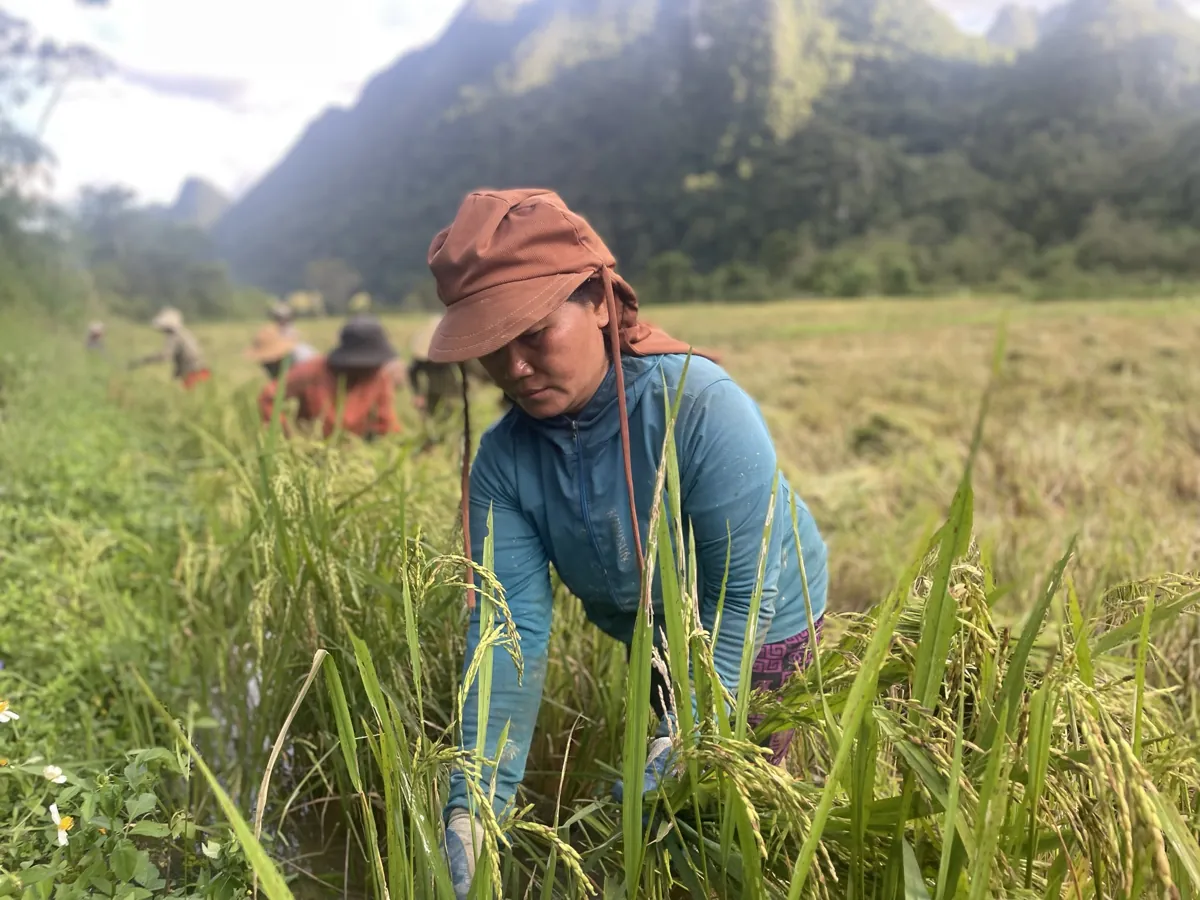
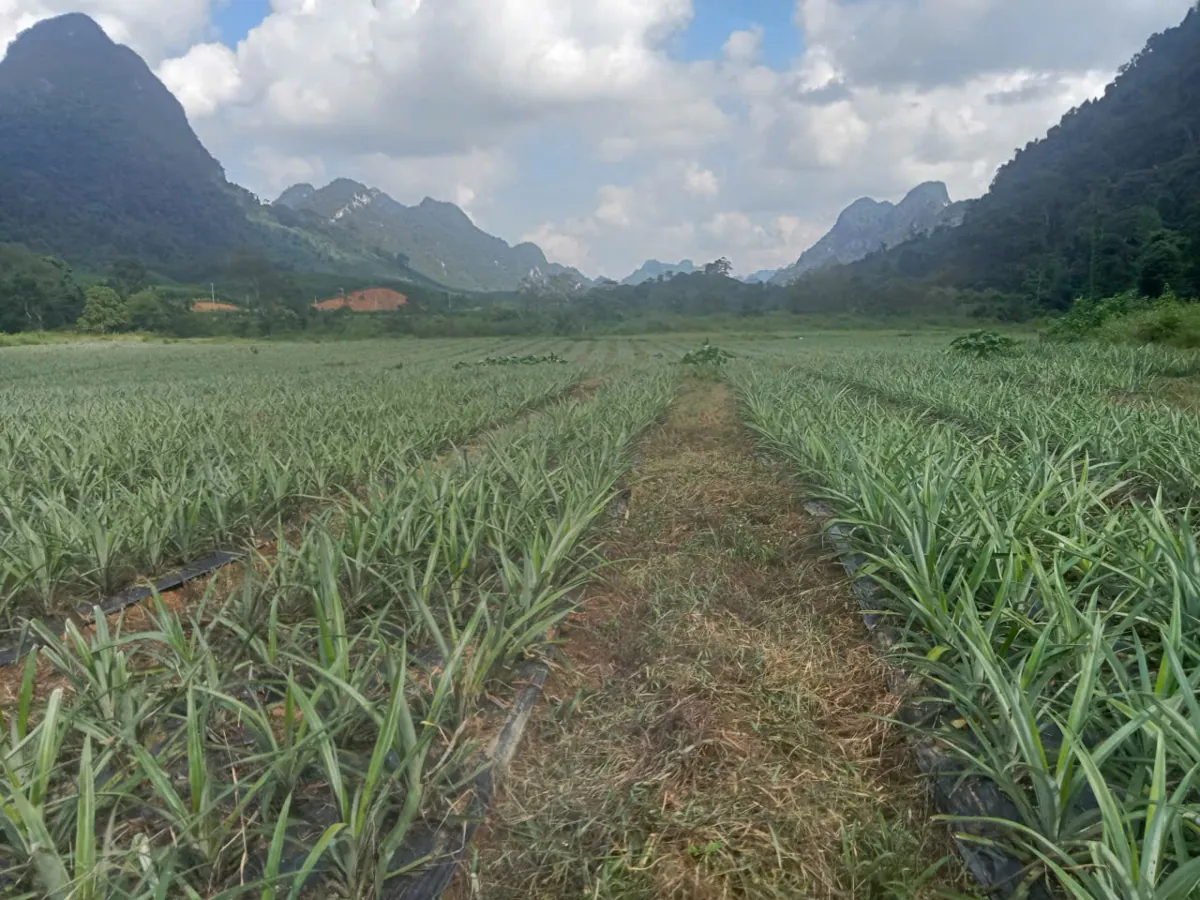
Yên Hợp now has power, a road, a school, pineapple fields, and rice harvests brought in by the grandchildren of people who once lived in caves. But sit with an elder over a plate of grilled mountain snails and hear about the caves that used to be home, and those sixty years feel very short.
- 1959
- border guards meet the Rục
- 34
- people, 11 families, first to settle
- 3→1
- old hamlets merged into Yên Hợp
Things to do
- Hear elders tell of life in the caves
- Try grilled mountain snails, and đoác wine if there is some
- Listen to the trơ bon and jaw harp
- Walk through the families' rice paddies and pineapple fields
- In the flood season, kayak across Hung Tru to the hamlet